Home › Brick Retaining Walls
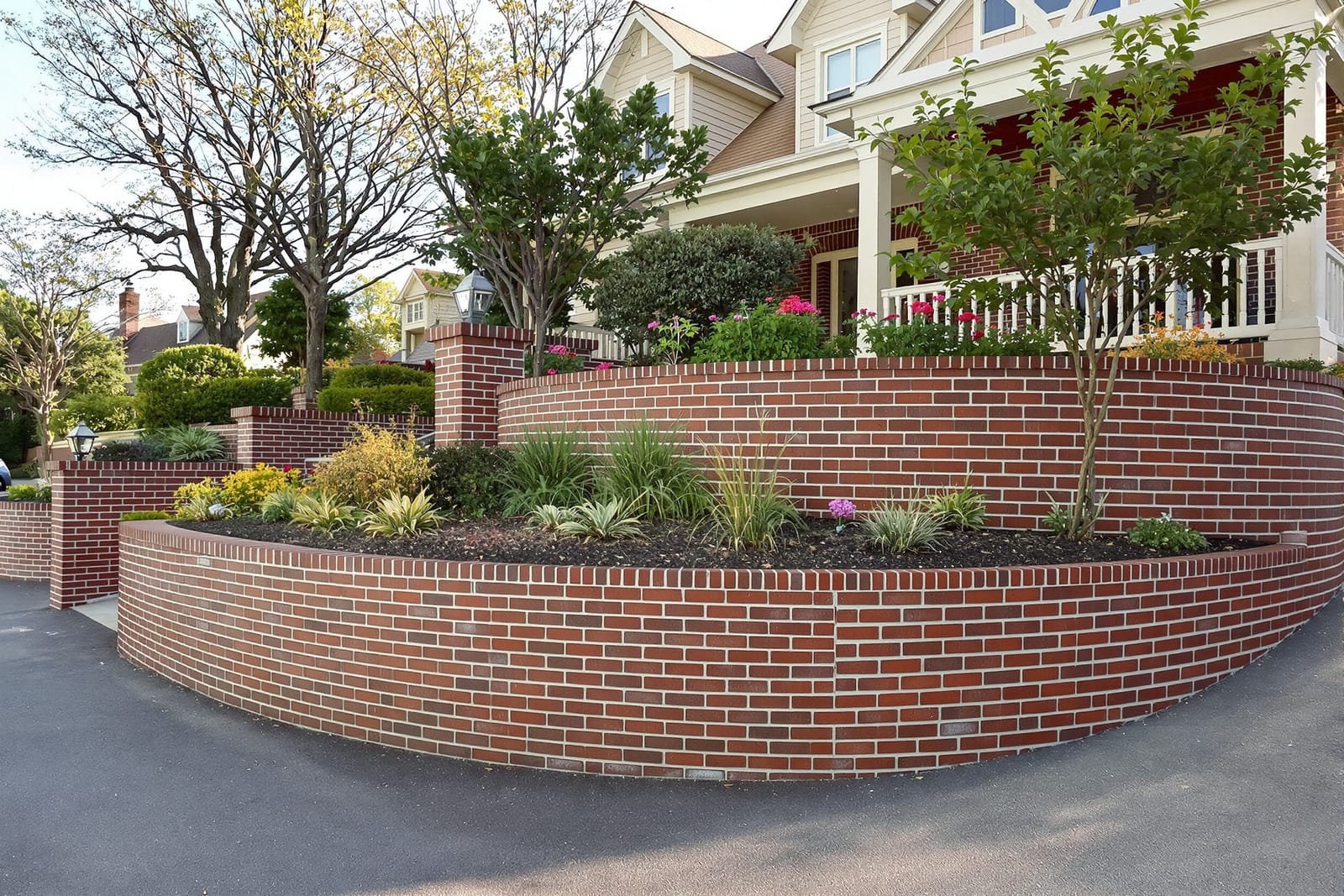
We design and build brick retaining walls in Grand Rapids, MI to manage slopes and add structure to your yard. Our team handles walls for gardens, terraces, and property lines with proper drainage and footing. Protect your landscape with attractive brick walls that resist leaning and cracking.
Superior Masonry Grand Rapids provides professional brick retaining walls throughout Grand Rapids, MI, Michigan and the surrounding area. Our licensed, insured crew delivers safe, clean, on-time work with a free estimate before anything begins. Call (616) 552-4306 or request your free quote.
Brick Retaining Walls Built for West Michigan Soil and Weather
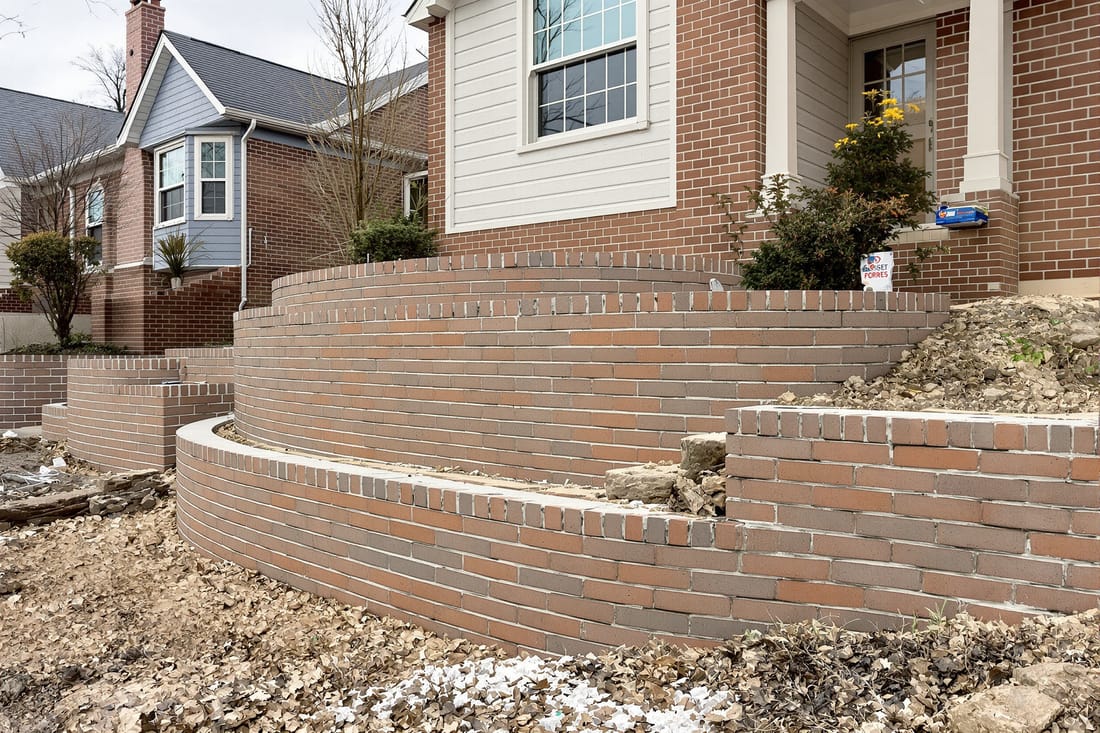
Brick retaining walls in Grand Rapids have to deal with two things every year: freezing, thawing, and heavy, wet spring soil pressing against the wall. At Superior Masonry Grand Rapids, we design and build brick retaining walls that take those forces seriously, so you are not calling someone in five years to fix a bulge or a crack.
Around Grand Rapids, we see a mix of older city lots with tight backyards, sloped walkouts in newer subdivisions, and lake or river properties with aggressive erosion. Each setting calls for a different approach. A low brick garden terrace along a 1920s Heritage Hill home is not built the same as a 5 foot wall holding back a sandy bank near the Grand River. We size the footing, drainage, and base preparation to the actual conditions on your property, not to a generic diagram.
Our focus is structural first, then appearance. That means we start with soil conditions, drainage paths, and loads, then select brick patterns and finishes that fit your house. Whether you want the wall to match an existing brick façade or to stand out as a separate feature, Superior Masonry Grand Rapids builds it to look right and stay straight through Michigan winters.
How We Design a Brick Retaining Wall for Your Property
A good brick retaining wall starts on paper and in the soil, not in a pallet of brick. When you call Superior Masonry Grand Rapids, we begin with an on site visit. We measure the slope, note nearby structures, check existing drainage, and ask how you actually use the space. Do you need a flat play area for kids, space for parking, or cleaner planting beds along the foundation?
Next, we determine wall height, length, and load. Walls under about 4 feet can often be built without engineering, but anything taller, or supporting a driveway or structure, may require design calculations or permits through the City of Grand Rapids or surrounding townships. We handle those discussions and can coordinate with an engineer when needed.
We then select the wall type. Most brick retaining walls in this area are either brick veneer on a reinforced concrete or block backing, or brick laid as a structural facing over a concrete base. True solid brick retaining walls are rare today due to cost and code expectations, but we can build them for historic homes where appropriate. For each option, we explain the pros, cons, and cost implications, so you understand exactly what you are getting before we dig.
Finally, we match the brick. We look at your home, nearby masonry, and your long term plans. In Grand Rapids, common choices include modular clay brick in red or earth tones, with smooth, wire cut, or tumbled textures. If you own an older brick home, we can source blends that come close to existing colors so the wall looks like it belongs there, not like an afterthought.
Step by Step: Our Brick Retaining Wall Construction Process
Once the design is set, Superior Masonry Grand Rapids follows a consistent build process so the wall performs as expected.
1. Layout and excavation: We mark the exact wall line, confirm setbacks from property boundaries, and excavate for the footing and drainage zone. In Grand Rapids clay soils, this usually means going deeper than many homeowners expect to reach undisturbed, stable ground.
2. Footing and base: For most retaining walls, we pour a reinforced concrete footing below frost depth or create a compacted gravel base if using a block backup system. The width and thickness depend on wall height and soil type. Proper compaction here is critical. If the base shifts, the wall will move.
3. Drainage and backfill system: Behind the wall we install perforated drain tile (French drain) at the base, surrounded by washed stone and wrapped in filter fabric. This collects water and directs it away so hydrostatic pressure does not push the wall outward during spring thaws. We often include weep holes or hidden outlets through the face of the wall, especially in areas with limited downhill drainage.
4. Structural backing: For most projects, we build a reinforced concrete or concrete block retaining structure first. Vertical rebar, horizontal reinforcement, and proper grout fill give the wall its strength. The brick you see on the outside is then tied back into this structure using corrosion resistant ties.
5. Bricklaying and joints: We set brick in mortar courses, keeping consistent bed and head joints and monitoring level and plumb continuously. On retaining walls, we pay close attention to joint tooling and sealing to limit water penetration. We can use a flush, struck, or concave joint depending on the look and exposure.
6. Cap installation and finishing: At the top of the wall we typically install a concrete, natural stone, or brick soldier course cap with a slight overhang and drip edge. This helps shed water away from the wall face. We finish by grading the surrounding soil, reconnecting downspouts if they were temporarily removed, and cleaning the brick to remove mortar haze before we leave.
Brick, Caps, and Layout Options That Work in Grand Rapids
Design decisions on a brick retaining wall are not just cosmetic. They also affect maintenance, durability, and cost. Superior Masonry Grand Rapids walks you through each one with local conditions in mind.
Brick type: Clay brick is the standard choice for retaining walls because it stands up well to freeze thaw cycles. We avoid soft interior brick or reclaimed material that cannot handle ground contact. For lakefront or high splash areas, we may recommend higher grade, low absorption brick to resist constant moisture.
Pattern and layout: Running bond is common, but for visible front yard walls, we can use stack bond, soldier courses, or decorative insets to break up long runs. On older Grand Rapids homes with classic detailing, Flemish or English bond accents can tie in nicely with existing architecture.
Caps: A good cap protects the wall from direct water entry. Choices include matching brick laid on edge, precast concrete caps in buff or gray, or natural stone like limestone or bluestone. Thicker stone caps cost more but handle Michigan weather very well and give a substantial look, especially near entry steps and walks.
Terracing and steps: On steeper slopes, one tall wall is not always the best answer. We often design a series of shorter brick retaining walls with integrated steps or landings. This reduces pressure on each wall, looks better, and is safer in icy conditions common in Grand Rapids winters.
Lighting and railings: For walls near driveways, patios, or walkways, we can incorporate low voltage lighting or anchor sleeves for railings during construction. Doing this up front avoids drilling into fresh brick later, which can compromise the wall if done poorly.
Costs, Common Problems, and How We Prevent Them
Homeowners in Grand Rapids often ask why costs vary so much between retaining wall quotes. The answer usually comes down to what you cannot see: footing depth, drainage details, reinforcement, and brick quality. Superior Masonry Grand Rapids explains these factors clearly before you sign anything.
Main drivers of cost include wall height and length, type of structural backing, brick selection, access for equipment, and whether old failed walls need demolition and disposal. Tight urban yards with limited access may require more hand work, which raises labor time. If utilities are near the wall line, we schedule MISS DIG and hand dig around critical lines.
Common problems we see on older or poorly built brick retaining walls include bulging, step cracking, leaning, and efflorescence (white powdery deposits). Bulging and leaning often trace back to missing drain tile, undersized footings, or backfill with heavy, wet clay instead of free draining stone. Efflorescence points to water moving through the wall and carrying salts to the surface.
We prevent these failures by overbuilding drainage, not cutting corners on base preparation, and using proper joint tooling and control details. In many Grand Rapids neighborhoods, we are called to replace railroad tie or timber walls that have rotted out. When we rebuild in brick, we correct the underlying issues instead of simply copying the footprint, which usually means better drainage paths and improved grading.
If you already have a failing brick retaining wall, we assess whether it is safer and more cost effective to repair or rebuild. Minor issues like open mortar joints or isolated cracks can often be repointed and sealed. Significant leaning or rotation generally calls for replacement, especially where the wall supports a driveway or public sidewalk.
What to Know Before Hiring a Brick Retaining Wall Contractor
Before you hire anyone to install brick retaining walls on your Grand Rapids property, there are a few practical checks you should make.
First, confirm that the contractor actually specializes in masonry, not just general landscaping. A brick retaining wall is a structural masonry project, and it needs footing knowledge, reinforcement experience, and comfort with local codes. Superior Masonry Grand Rapids works primarily in masonry, so we bring that focus to the job.
Second, ask how they handle drainage. Any vague answer here is a red flag. You should hear specifics about perforated pipe, gravel backfill, filter fabric, outlets, and how they keep surface water away from the wall. Ask where the drain line will exit and how they will protect it from freezing or clogging.
Third, request references or photos of brick retaining walls that have been through at least a few winters. In the Grand Rapids area, performance over time matters more than how a wall looks on day one. A wall that is still straight and tight after five or ten winters says more about workmanship than any sales pitch.
Finally, make sure you understand the scope in writing: excavation depth, footing details, drainage components, type and brand of brick, reinforcement, cap material, and cleanup expectations. We provide written proposals that spell out these items so you know what you are paying for and how the wall is built.
If you are ready to reclaim a sloped yard, replace a failing wall, or add structure to your landscape with durable brick retaining walls, Superior Masonry Grand Rapids can walk you through design, permitting, and construction from start to finish.