Home › Foundation and Basement Masonry
We handle masonry foundation repair in Grand Rapids, MI for block and stone basement walls. Our services include crack repair, bowing wall stabilization, and partial rebuilds where needed. Protect your home structure and reduce water issues with professional basement masonry solutions.
Superior Masonry Grand Rapids provides professional masonry foundation repair throughout Grand Rapids, MI, Michigan and the surrounding area. Our licensed, insured crew delivers safe, clean, on-time work with a free estimate before anything begins. Call (616) 552-4306 or request your free quote.
Foundation and Basement Masonry in Grand Rapids, MI
Masonry foundation repair is not something to gamble with in West Michigan soil conditions. At Superior Masonry Grand Rapids, we focus on practical, long‑lasting fixes for basements and foundations that see real freeze‑thaw cycles, clay movement, and seasonal groundwater.
When we look at a foundation or basement, we start by asking three questions: What is moving, why is it moving, and how much life is left in the existing materials. That means we do more than glance at a crack. We check interior and exterior walls, floor elevation changes, doors that stick, past waterproofing attempts, and any visible bowing or step cracks in the block or brick.
Our crew works specifically with the conditions around Grand Rapids, from older fieldstone and brick foundations in Heritage Hill to concrete block basements in post‑war neighborhoods and poured walls in newer suburbs. We match repair methods to the actual structure, instead of forcing a one‑size‑fits‑all product on every house.
If your basement walls are cracking, bowing, or letting in water, our goal is to stabilize the structure first, then deal with water management, and only then talk about cosmetic finishes. That order matters for long‑term performance in our climate.
How We Diagnose Masonry Foundation Problems
Effective masonry foundation repair starts with a thorough assessment. When Superior Masonry Grand Rapids visits your home, we typically spend the first part of the visit diagnosing, not selling.
Inside the basement, we review: where the cracks are (horizontal, vertical, stair‑step, or diagonal), whether they are wider at the top or bottom, whether the wall is plumb or bowing, any signs of efflorescence (white salts on the surface), rusting steel beams, and the condition of mortar joints. We also look for high water marks, damp spots after a recent rain, and areas where a previous patch failed.
Outside, we walk the perimeter. We check grading around the house, how close gutters and downspouts discharge near the foundation, concrete or paver patios that may be pushing against the wall, and nearby large trees whose roots could be affecting the foundation. In Grand Rapids, we often see issues caused by older clay drain tiles that have collapsed or clogged, which we note in our report.
We may use a laser level or string line to measure how far a wall has deflected. Hairline shrinkage cracks that have not moved for years are treated very differently than a block wall that has bowed in several inches along a horizontal mortar joint. When needed, we mark cracks and use crack monitors to see if movement continues over time.
By the end of the inspection, we can typically tell you if the problem is mainly structural, mainly water related, or a combination. That determines whether we talk about wall reinforcement, rebuilding, waterproofing, or all of the above.
Common Foundation and Basement Issues We Repair
Homes around Grand Rapids experience a specific set of foundation and basement problems because of our mix of clay and sandy soils and strong winter freeze cycles.
One of the most common issues is horizontal cracking in concrete block walls. This often shows up mid‑wall and is usually caused by outside soil pressure combined with poor drainage. Superior Masonry Grand Rapids addresses this with reinforcement (such as carbon fiber straps or steel beams) and, when needed, exterior excavation to relieve pressure and improve drainage.
Another frequent problem is stair‑step cracking along mortar joints in block or brick. These can indicate uneven settling or frost heave. In some cases, we can grind out and repoint damaged joints and inject low‑pressure epoxy or polyurethane into active cracks. In more advanced cases, we may recommend partial wall rebuilds or adding footing support.
We also see older stone or brick foundations with deteriorated mortar that is soft or crumbling. Here, the solution might be full repointing with a mortar mix compatible with the original materials, along with interior or exterior sealing strategies that respect the wall’s need to breathe.
Water intrusion is a constant concern. Typical signs are damp corners, peeling paint, moldy smells, or water at the cove joint where the floor meets the wall. Depending on the source, our masonry foundation repair approach may include sealing cracks, installing or repairing interior drain systems, exterior waterproof membranes, or simply correcting poor grading and downspout discharge.
We also correct previous “repairs” that created new problems, such as hard hydraulic cement slapped on a flexible crack, non‑breathable coatings trapping moisture in brick, or unreinforced block underpinning under an addition.
How Masonry Foundation Repair Is Actually Performed
Once we have a clear diagnosis, Superior Masonry Grand Rapids lays out a step‑by‑step plan for the actual repair work. The exact process depends on your home, but several methods are common in Grand Rapids.
For bowing block walls, we often use carbon fiber straps bonded to the wall from sill plate to slab. The wall is prepared by grinding the surface, cleaning it thoroughly, and then applying structural epoxy to secure the straps. Where deflection is more severe, we may install interior steel I‑beams tied into the floor and joists above. These beams are set at calculated intervals and anchored so the wall cannot continue to move inward.
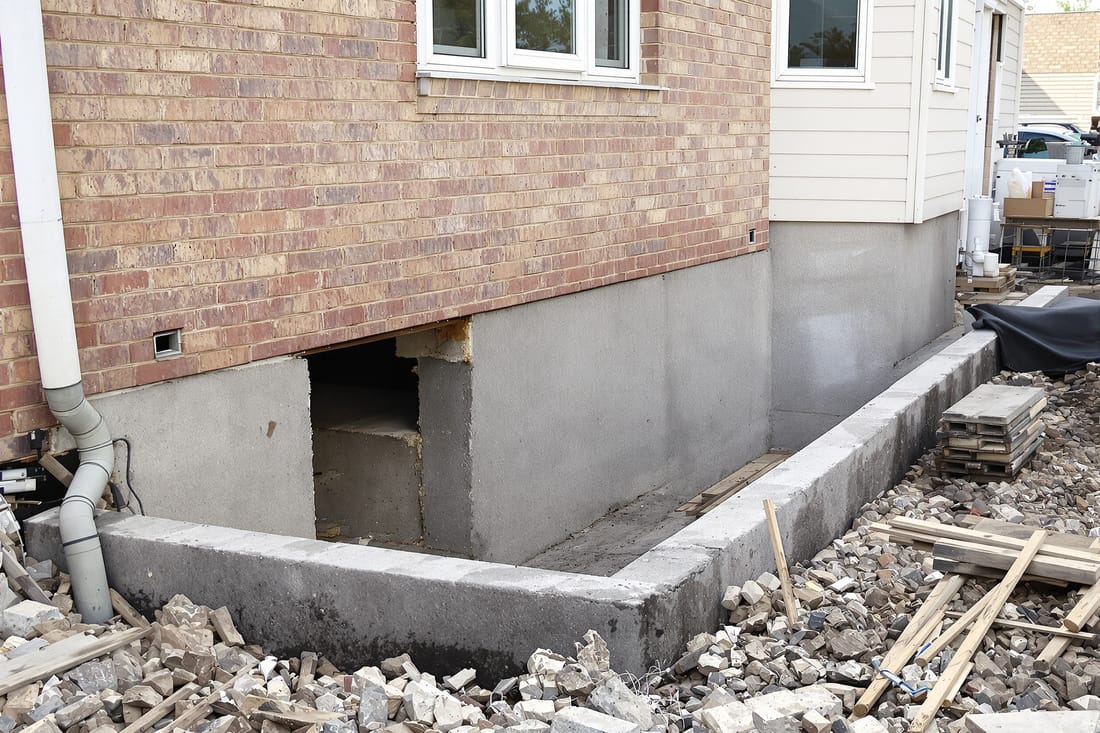
If a section of wall is too compromised to trust long term, we may selectively demolish and rebuild that portion. This involves shoring, removing damaged block or brick, cleaning and inspecting the footing, replacing with new block or poured concrete, and tying the new work into existing walls with reinforcing steel and proper bond beams.
For active cracks in poured concrete foundations, we often inject them with epoxy (for structural repair) or polyurethane foam (for flexible water sealing), sometimes in stages. Ports are installed along the crack, the surface is sealed, and the resin is injected under controlled pressure so it fills the entire depth.
When water issues are part of the problem, work may include excavating along the outside wall, cleaning and repairing the masonry, applying a waterproof membrane, installing drainage board, and replacing or adding footing drains. Inside, we can cut the slab perimeter, install a drain channel and sump basin, then re‑pour the concrete.
Throughout any masonry foundation repair, we pay attention to tie‑ins, reinforcement, and curing times. Quick cosmetic fixes without proper structure behind them do not hold up to Grand Rapids winters, so we make sure every step is tied to the long‑term performance of the wall.
Costs, Materials, and Timing in the Grand Rapids Climate
Homeowners usually want to know what drives the cost of masonry foundation repair. With Superior Masonry Grand Rapids, the main factors are access, wall length and thickness, severity of movement or damage, need for excavation or drains, and whether any part of the wall must be rebuilt.
Simple crack injections that are easy to reach generally fall on the lower end of the cost range. Structural reinforcement with steel or carbon fiber costs more per wall but is still often more affordable than full replacement. Full wall rebuilds, major excavations, or new drainage systems make up the higher end. We provide line‑item estimates so you can see exactly where the money goes, whether into materials, excavation, or labor.
Material choices also matter. We specify concrete block, rebar, mortar types, waterproofing membranes, and carbon fiber systems that are proven in our region’s freeze‑thaw conditions. For older homes, we match mortar strength and color so the repair does not create new cracking by being harder or more brittle than the original masonry.
Timing is another key factor in Grand Rapids. Exterior excavation and wall rebuilds are best scheduled from late spring through early fall, when soil is not frozen and heavy rains are less frequent. Crack injections and interior reinforcement can be done year‑round, but we adjust curing times based on indoor temperature and humidity. If your foundation issue is urgent in winter, we can stage work to deal with immediate structural concerns first, then return for exterior drainage or finishing when the ground allows.
On every project, we go over not only the price but also what might extend or reduce costs, such as limited access for equipment, unexpected footing conditions, or additional water problems uncovered once we open up the area.
What Grand Rapids Homeowners Should Know Before Hiring
Before you decide on any masonry foundation repair, it helps to know what to ask and what to expect. Superior Masonry Grand Rapids encourages homeowners to get clear answers from any contractor on three points: What exactly is failing, what is the proposed repair method, and how will that method handle future movement and water.
Ask to see how the contractor measured bowing or movement. Ask whether their solution addresses only symptoms, such as interior wall coatings, or the underlying cause, such as soil pressure or poor drainage. In Grand Rapids, ignoring outside water management is one of the biggest reasons repairs fail.
You should also confirm that the company is familiar with local building practices and inspection requirements. Some structural repairs, such as beam systems or major rebuilds, may require engineering input or permits. We coordinate with engineers and local officials when needed so the work can be documented for future resale and insurance.
Finally, discuss how the work will affect your use of the basement during and after the project. We explain where we will need access, how loud or dusty specific tasks will be, and how long areas will be off limits while concrete or epoxy cures.
If you live in Grand Rapids or nearby communities and see cracks, bowing, or water in your basement, it is worth getting a straightforward assessment before the next wet season or deep freeze. Superior Masonry Grand Rapids can inspect the problem, explain the options in plain language, and build a repair plan that fits your home, your budget, and our local conditions.