Home › Brick Veneer Installation
Our team installs brick veneers in Grand Rapids, MI to give homes the look of full brick without the weight. We handle exterior walls, accents, and interior feature walls with thin brick systems. Enjoy a classic brick appearance with professional flashing, sealing, and weather protection.
Superior Masonry Grand Rapids provides professional brick veneers throughout Grand Rapids, MI, Michigan and the surrounding area. Our licensed, insured crew delivers safe, clean, on-time work with a free estimate before anything begins. Call (616) 552-4306 or request your free quote.
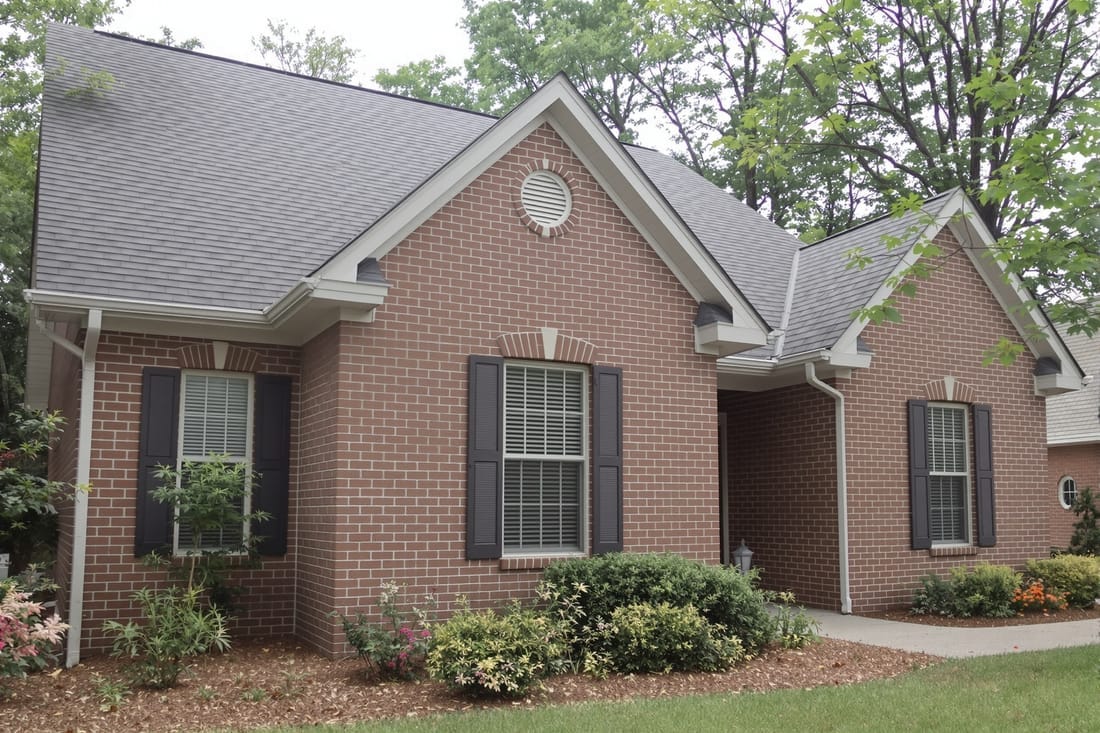
Brick veneers that fit Grand Rapids homes and weather
Brick veneers give you the look of full brick without the weight or cost, and when they are installed correctly they hold up very well to Grand Rapids winters, lake effect moisture, and freeze-thaw cycles. At Superior Masonry Grand Rapids, we focus on details that matter for our local climate, like drainage, mortar choice, and proper attachment so your veneer keeps looking sharp instead of cracking or bowing.
Brick veneers are typically a single wythe (one brick thick) system tied back to a wood or metal-framed wall. Between the veneer and the structural wall there is a small air space. That gap is not wasted space. It lets moisture that penetrates the brick drain down to flashing and weep holes so it can exit instead of soaking into your framing. In West Michigan where snow and wind-driven rain are common, getting this drainage path right is critical.
Whether you are updating a dated siding façade, adding a brick accent wall, or wrapping a garage or porch, we start by walking your property with you. We look at how water currently moves around your home, where snow piles up, sun exposure on each wall, and any existing cracks or settlement in foundations. This site-specific approach helps us recommend a veneer design that will not just look good in photos but will work well long term in Grand Rapids conditions.
How our brick veneer installation process works
A successful brick veneer installation is more than stacking thin bricks in a straight line. Superior Masonry Grand Rapids follows a step-by-step process that meets or exceeds Michigan building code and manufacturer specs.
1. Assessment and prep: We inspect your sheathing, framing, and foundation ledge or support. If we are installing over existing siding, we typically remove it down to the sheathing so we can see and fix any rot, mold, or uneven surfaces. In older Grand Rapids homes we often find small areas of water damage around window sills or along the bottom plate. We repair or coordinate repairs before we start veneer work.
2. Weather barrier and flashing: We install or upgrade a water-resistive barrier (WRB) such as house wrap or building paper, then tape or seal all seams and penetrations. At the base of the wall and above openings like windows and doors, we add metal or flexible flashing that directs any water in the cavity to the outside. In our climate, this step is essential. Poor flashing is one of the main reasons veneers fail after a few winters.
3. Support and anchoring: Real brick veneers are heavier than manufactured stone or panel systems, so they need proper support. We confirm that there is a concrete or masonry ledge, angle iron, or engineered support bracket where needed. Then we install corrosion-resistant brick ties or anchors into the framing at the spacing required by code, usually every few courses horizontally and vertically. These ties are what keep the veneer attached to the structure when we get strong west winds off Lake Michigan.
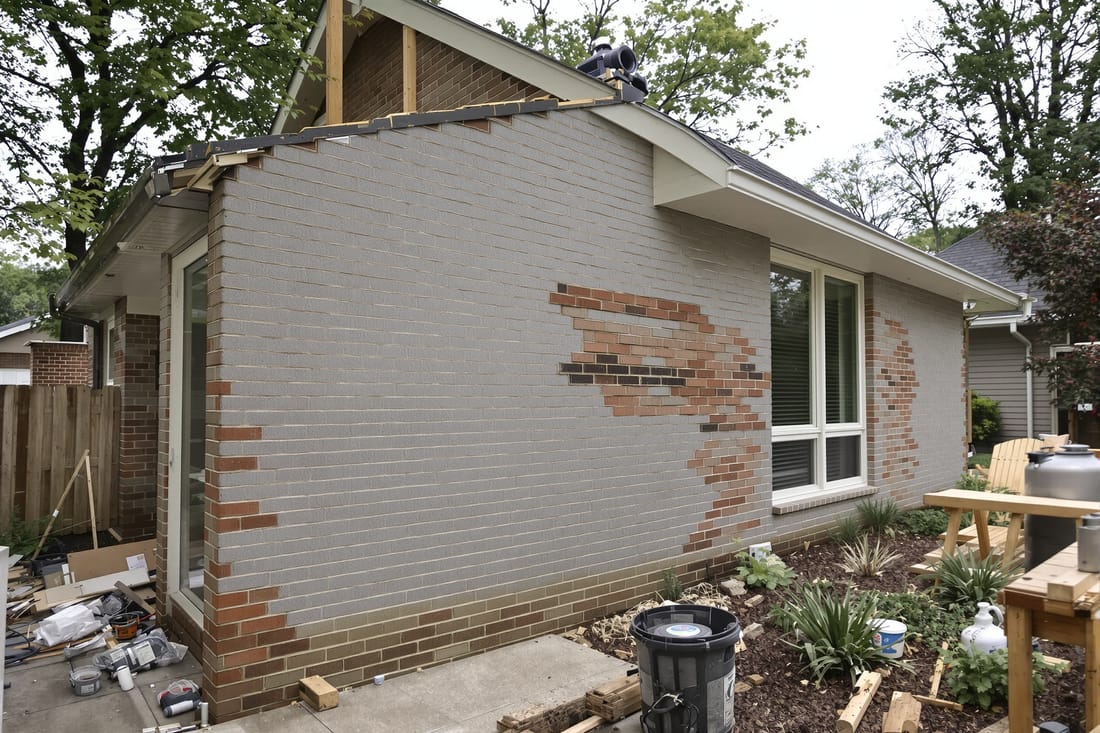
4. Laying the brick: We mix mortar suited to the specific brick and conditions, often a Type N or Type S depending on load and exposure. We then begin laying full or thin veneer units from the bottom up, maintaining consistent joint size and checking for level and plumb as we go. We create a small air gap behind the brick, and we leave weep spaces at the bottom to allow drainage. Around windows, doors, and corners we use special units or cut brick to create clean lines and strong bonds.
5. Tooling and cleanup: Once the mortar sets to the right firmness, we tool the joints to your chosen profile and brush the face to remove stray mortar. Finally, we rinse (not pressure wash too aggressively) so we do not scar the brick, and we protect fresh work from sudden rain or freezing temperatures. In colder months in Grand Rapids we often use insulated tarps or temporary heat so the mortar cures properly.
Design options and material choices for brick veneers
Brick veneers are highly customizable, so you can match an existing structure or give your home a completely different look. Superior Masonry Grand Rapids will bring real samples to your home so you can see colors in your actual daylight, which often looks very different from a showroom.
Color and texture: You can choose from traditional reds, earth-tone browns and tans, charcoal and black blends, or more modern whites and grays. Textures range from smooth face to tumbled, wire-cut, or hand-molded looks. In many Grand Rapids neighborhoods we see clients mixing a darker base brick with lighter accents to break up large walls and fit in with older homes nearby.
Patterns and details: Running bond is the most common pattern, but veneers allow for soldier courses over windows, rowlock caps on short walls, and basketweave or herringbone in accent panels. We often use these patterns on porch fronts, under front windows, or on chimney chases to give interest without driving costs too high. Adding brick returns at outside corners instead of thin metal trims gives a more authentic full-brick appearance.
Full brick veneer vs thin brick: Full brick veneer units are standard brick depth and require a supporting ledge or shelf angle. Thin brick is a sliced face of real brick, usually about half to three-quarters of an inch thick. Thin brick can be adhered to concrete, block, or properly prepared framed walls without a structural ledge. For interior accent walls or basement remodels in Grand Rapids, thin brick is often the best choice. For exterior work that needs to align with existing brick, we usually recommend full brick veneer.
Mortar and joint style: Mortar is not just glue, it is part of the look. You can go with a closely matched color for a more uniform wall or a contrasting mortar to highlight each unit. Joint styles like concave, v-joint, flush, or raked change how shadows fall on the wall. We can mock up a small sample panel on site so you can see how your chosen brick and mortar combination looks in real light before we commit to the whole project.
Costs, timing, and what affects your brick veneer price
Homeowners in Grand Rapids often ask why two brick veneer quotes can be so different. Superior Masonry Grand Rapids breaks down your estimate in plain language so you know exactly what you are paying for.
Project size and complexity: A straightforward front façade with few windows is less labor-intensive than a home with multiple bump-outs, arches, or detailed patterns. Corners, window returns, and decorative bands take more time and cutting. We note these during your site visit and explain how each feature affects your cost.
Structure and prep work: If your existing wall is plumb, has a proper foundation ledge, and no major damage, prep is simple. Many older homes in Grand Rapids have settling at one corner or uneven sheathing that must be corrected so the veneer will not step or crack later. Sometimes we need to add or adjust a shelf angle along a framed wall. These structural adjustments add to cost but prevent much more expensive repairs later.
Material choices: Full brick veneer requires more material and labor than thin brick. Premium brick lines with special textures or custom colors cost more than standard stock brick. The mortar type, any reinforcing like joint reinforcement, and accessories such as weep vents and flashing also factor in, although they are a smaller portion of the total.
Season and schedule: Our masonry season in Grand Rapids is busiest from late spring through early fall, when temperatures are ideal for mortar curing. Installing veneers in colder weather is possible but may require cold-weather additives, temporary heat, and protection, which adds some cost. When we prepare your schedule, we also look at rain forecasts so we avoid exposing fresh masonry to heavy downpours.
During your estimate we will walk you line by line through materials, labor, and any contingencies, like hidden water damage behind existing siding. If we uncover something unexpected once we open the wall, we stop, show you, and discuss options before moving forward so you stay in control of your budget.
Common brick veneer issues and how we prevent them
Brick veneers can last for decades in Michigan if they are installed with good drainage and proper attachment. Many of the problems we are called to fix in Grand Rapids are the result of shortcuts taken during original construction, especially in homes built during high-volume building booms.
Water intrusion and efflorescence: When flashing and weep paths are missing or blocked, water sits behind the veneer and can eventually find its way indoors. Signs include white powdery deposits (efflorescence), spalling brick faces, or peeling paint on interior walls. At Superior Masonry Grand Rapids we design the cavity so water has a clear path out. We leave open or vented head joints at the base and use compatible flashing materials that will not corrode in our climate.
Cracks and bulging: Movement in the building structure or foundation can show up as stair-step cracks in mortar joints or slight bulges in the veneer. We look for signs of settlement at the estimating stage, like uneven floors, sticking doors, or existing cracks in foundation walls. When needed, we coordinate with structural contractors so that movement is addressed before we install new veneer. During installation we use enough properly placed wall ties so the veneer moves with the structure instead of separating from it.
Freeze-thaw damage: Water that soaks into saturated brick or mortar can expand when it freezes and cause chipping. To reduce this risk we select brick rated for exterior use in our climate zone and use air-entrained mortar when appropriate. Proper joint tooling and sealing where brick meets other materials, like windows and trim, also limit how much water can get in.
Maintenance expectations: Brick veneers require less maintenance than many siding products, but they are not completely maintenance-free. Every few years you should visually inspect for missing mortar, cracked caulk around windows, or blocked weep holes along the bottom. If you see gaps or loose joints, a simple tuckpointing repair can keep small issues from turning into bigger ones. We explain these maintenance basics before we leave so you know how to keep your new veneer in good shape for decades.
If you are considering brick veneers for your Grand Rapids home, we are happy to visit, evaluate your existing conditions, and put together a detailed, local-climate-ready plan for your project.